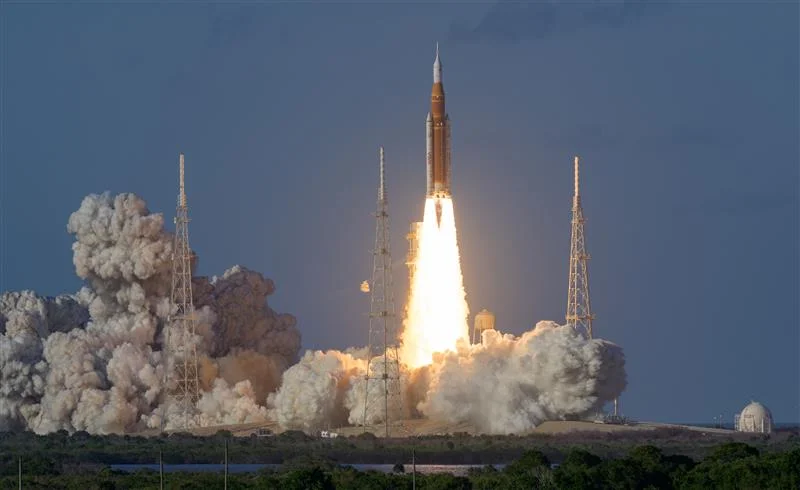
This week, four astronauts aboard Artemis II will travel farther from Earth than any humans have since the Apollo era. For a brief period, they will disappear behind the far side of the Moon, losing communication with Earth before re-emerging into signal range.
For most of us, the story feels familiar. Rockets launch. Missions unfold. Technology advances. Exploration continues.
But behind every successful mission is something less visible.
A discipline of thinking.
In another April more than fifty years ago, the world watched in suspense as Apollo 13 became one of the most extraordinary recovery efforts in history. What began as a routine lunar mission quickly became a life-or-death crisis when an oxygen tank exploded, crippling the spacecraft and forcing NASA engineers and astronauts to improvise solutions with limited information, limited resources, and almost no margin for error.
The famous phrase “Failure is not an option” has become shorthand for determination under pressure. But determination alone was not enough to bring the crew home safely.
What saved the mission was structured thinking
NASA teams needed to quickly understand what had happened, what mattered most, and what options remained viable. They had to distinguish symptoms from causes. They had to make decisions with incomplete data. They had to anticipate secondary risks created by every potential solution.
In short, they needed a repeatable way to think clearly in a situation that was anything but clear. That moment helped catalyze the recognition that complex problems require more than expertise. They require shared frameworks for reasoning. They require a disciplined approach to diagnosing problems, making decisions, and anticipating risk.
In many ways, the challenges facing organizations today are not so different. Every leadership team is navigating its own version of an unfamiliar frontier. Artificial intelligence is transforming workflows. Supply chains continue to shift. Markets move faster than planning cycles. Information is abundant, but clarity often is not.
Technology has accelerated our ability to generate answers. It has not necessarily improved our ability to ask the right questions.
That distinction matters more than ever.
When Apollo 13 lost power, the problem was not simply technical. It was cognitive. Teams had to rapidly build a shared understanding of the situation before meaningful decisions could be made. The process of thinking together became the difference between survival and catastrophe.
Today, organizations often attempt to move faster by compressing decision time. Meetings are shortened. communication channels multiply. dashboards update in real time.
Speed has become a proxy for effectiveness.
But speed without clarity can create the illusion of progress while increasing the likelihood of rework, misalignment, and unintended consequences.
The paradox is that disciplined thinking often increases speed over time.
Clear situation appraisal reduces false starts. Structured decision making reduces reversals. Anticipating potential problems reduces costly surprises. The result is not slower organizations. It is more reliable ones.
As Artemis II travels beyond the far side of the Moon, its crew will temporarily lose communication with mission control. During that time, capability matters more than connectivity. The systems, training, and thinking discipline embedded before launch become the foundation for success when real-time guidance is unavailable.
Organizations face similar moments more often than we might admit.
Teams operate across geographies and time zones. Leaders cannot personally oversee every decision. AI systems generate recommendations faster than humans can fully evaluate them.
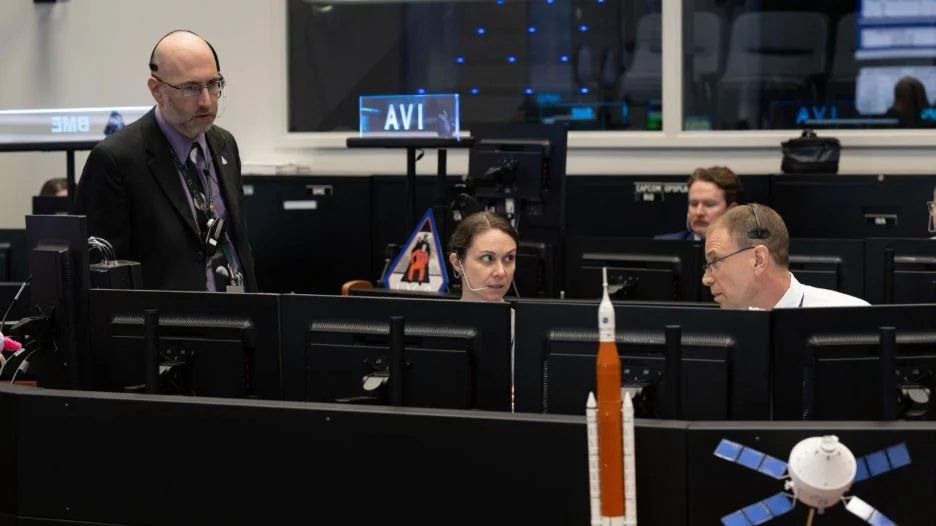
Increasingly, performance depends on whether disciplined thinking is embedded into how work gets done.
Exploration has always been a thinking problem.
The Apollo missions expanded what was technically possible. They also demonstrated the importance of structured reasoning when the unexpected occurs. Artemis II continues that legacy, not only by testing spacecraft systems, but by strengthening the capabilities required for future missions to the Moon and beyond.
In business, exploration takes different forms.
Entering new markets. Integrating emerging technologies. Redesigning operating models. Responding to unexpected disruptions. Each involves uncertainty. Each involves risk. Each involves decisions that cannot be perfectly scripted in advance.
Organizations that treat thinking as an individual skill often struggle to scale performance. Organizations that treat thinking as an operational capability create compounding advantages over time.
The future will belong to organizations that are not only technologically capable, but cognitively capable.
AI can accelerate analysis. Automation can streamline execution. Data can illuminate patterns. But none of these eliminate the need for disciplined reasoning. If anything, they increase it.
As Artemis II reminds us, exploration is not defined by distance alone. It is defined by how well we prepare for what we cannot fully predict.
The enduring lesson of Apollo 13 is not simply that problems can be solved. It is that how we think determines whether they can be solved reliably. Technology expands what is possible. Disciplined thinking determines what is achievable.
And when the mission inevitably changes, that capability may matter more than ever.
Continue exploring
Putting it into practice
Help your team solve problems more consistently with a clear, structured approach